Aug 28, 2011

Dickcissels, Shorebirds and Mud

 I am terrible at identifying peeps and have been trying to distinguish those little buggers for the longest time and this weekend I finally had some progress in my identification of peeps.

Western Wood-Pewee at my house (nothing to do with peeps of course)


Christopher Rustay came down to Las Vegas on Saturday and met me at the Las Vegas Detention Center (yep, I spent the night in jail...just kidding) and I also got to meet a young birder from Santa Fe, along with his dad. Raymond and Bill (two birders from Albuquerque who I've birded with a bunch in the past couple years) also came down. We started by going to the Las Vegas NWR and birding a row of trees before the entrance to the refuge. It wasn't too productive but we saw a couple Wilson's Warblers, a Red-naped Sapsucker, and some MacGillavray's Warblers. After birding the stretch of trees for 20 minutes, we drove to the Headquarters. There are a row of trees near the road that can be good during migration in front of the HQ building. We walked along this and found a resting Barn Owl and a Cooper's Hawk (that was mobbing the Barn Owl). We also saw a Willow Flycatcher (my first for New Mexico) and heard 2 Upland Sandpipers.

The next stop was Crane Lake, just a 3 minute drive from Headquarters. We scoped the lake and found 2 American White Pelicans, 50+ Cinnamon Teal, 2 White-faced Ibis, and Peregrine AND Prairie Falcon. The Peregrine was on a big dead tree besides the lake and while we were looking at it a Prairie flew over our heads! There were also a couple peeps on the mud surrounding the lake. My first thought was "oh crap, what are these?" Luckily, I was with 5 birders who had a much larger knowledge of peep identification than I did. They showed me a group of peeps with tan throats and scalloped backs and pronounced them to be Baird's Sandpipers. I was very excited to finally find out what those "tiny things with tan throats" were and was feeling a bit more confident. Unfortunately, that was only one species and I have much more to learn before I master peeps. I was certainly a big help though. Thanks guys!

On McAlister Lake, there was another group of Baird's Sandpipers with about 850 Wilson's Phalaropes swimming on the lake! I had never seen that many phalaropes before-you could probably have walked across the lake on them! Besides the concentration of phalaropes, there wasn't much around or on the lake. We saw a Long-billed Curlew fly over and saw some more Willow Flycatchers but that was about it.

After birding the refuge for 3 hours, we headed out and drove to Springer Lake (about 1 hour north from Las Vegas). Talk about shorebirds! On the nearest side of the lake to the road there was barely anything but when we walked to the other side, there was a huge flock of mixed peeps, dowitchers, yellowlegs, plovers, and phalaropes. I got very excited at the sight of so many peeps and we decided to walk out on the mudflat a bit. We got pretty great views of Baird's, Western, and one Semipalmated Sandpiper along with some Lesser Yellowlegs, Wilson's Phalaropes, and Long-billed Dowitchers. The best bird was a lone juvenile Short-billed Dowitcher that Raymond picked out from a flock of Long-billeds. We were all hyped by this discovery (especially Christopher) and each of us got great looks at the bird in our scopes. Raymond tried to walk closer to the bird with his camera to take a picture and I decided to follow him. This was probably a mistake. As we walked farther towards the lake, it got harder to not sink into the mud. Raymond was a pro at keeping his shoes clean (and with a scope and camera) but I was pretty much a failure. I failed to learn that you have to walk with a broad stance and with light footsteps and consequently sunk knee-deep in the mud with my clumsy footsteps. I watched Raymond's many attempts at digiscoping the Short-billed Dowticher-which he eventually did get a great picture of-and tried not to say anything as my legs slowly oozed deeper into the mud. When Ray finally got a suitable picture of the bird, he turned to me and was surprised to see that I was now 2 feet shorter than him. He shook his head and laughed and helped me get out of my predicament by having me hold onto the scope and his hand. I eventually got out (after much tugging and squelching) and tramped back to the car with my shoes looking like they had just been stuck down a mud hole...never mind, that actually happened! I tried to remove as much of the mud as I could but I was still covered up to my knees for the rest of the day.

With me covered in mud, we stopped at a Subway to eat lunch and for me to try and clean up some more. I probably used Subway's entire stock of paper towels and still looked like crap. Oh well. Lunch was a relief though-nothing like eating Subway after half-sinking yourself in a mudflat!

We stopped at Maxwell NWR after lunch and I saw my life Dickcissel! We were near the entrance and saw a bird fly across the road and land on a fence and were very surprised to find out it was a Dickcissel (or DICK in its 4-letter code). It also happened to be #650 on my life list! Besides the DICK, we didn't see much (a couple American Avocets and a Peregrine Falcon were the exception).

The last stop of the day was Stubblefield Lake. It is just a short drive from Maxwell and can be very good for shorebirds sometimes. Unfortunately, there were very little shorebirds or waterfowl. Christopher did find a Common Loon as we were leaving, which is a pretty good bird for northern New Mexico.

Overall, it was a very fun and productive day and we ended up seeing 74 species. Below is the species list for the day:


Canada Goose -- 50
Mallard -- 1
Cinnamon Teal -- 80
Northern Shoveler -- 10
Green-winged Teal -- 20
Ruddy Duck -- 200
Common Loon -- 1
Eared Grebe -- 7
Clark's Grebe -- 2
Double-crested Cormorant -- 14
American White Pelican -- 3
Great Blue Heron -- 10
White-faced Ibis -- 16
Turkey Vulture -- 7
Northern Harrier -- 1
Cooper's Hawk -- 1
Swainson's Hawk -- 5
Red-tailed Hawk -- 1
Peregrine Falcon -- 1
Prairie Falcon -- 1
American Coot -- 50
Semipalmated Plover -- 2
Killdeer -- 10
American Avocet -- 5
Spotted Sandpiper -- 4
Solitary Sandpiper -- 2
Lesser Yellowlegs -- 3
Upland Sandpiper -- 2
Long-billed Curlew -- 1
Semipalmated Sandpiper -- 1
Western Sandpiper -- 4
Baird's Sandpiper -- 200
Short-billed Dowitcher -- 1
Long-billed Dowitcher -- 4
Wilson's Phalarope -- 850
Ring-billed Gull -- 10
Forster's Tern -- 1
Rock Pigeon -- 1
Eurasian Collared-Dove -- 4
White-winged Dove -- 1
Mourning Dove -- 9
Barn Owl -- 1
Black-chinned Hummingbird -- 2
Red-naped Sapsucker -- 1
Western Wood-Pewee -- 3
Willow Flycatcher -- 4
Say's Phoebe -- 1
Cassin's Kingbird -- 1
Western Kingbird -- 5
Loggerhead Shrike -- 1
Common Raven -- 3
Horned Lark -- 15
Violet-green Swallow -- 5
Barn Swallow -- 5
Bewick's Wren -- 1
House Wren -- 1
Northern Mockingbird -- 1
European Starling -- 40
MacGillivray's Warbler -- 2
Yellow Warbler -- 10
Wilson's Warbler -- 2
Chipping Sparrow -- 4
Brewer's Sparrow -- 2
Vesper Sparrow -- 2
Lark Sparrow -- 3
Lark Bunting -- 1
Dickcissel -- 1
Red-winged Blackbird -- 18
Western Meadowlark -- 2
Yellow-headed Blackbird -- 4
Bullock's Oriole -- 1
Pine Siskin -- 7
Lesser Goldfinch -- 10

Unfortunately, I forgot a camera (again) and don't have any pictures. I'm going to start bringing a camera on all my birding trips so this doesn't happen again!

Aug 20, 2011

Cornell Lab's Young Birders Event 2011

I just got back from Ithaca, New York, where I went to a fabulous 4-day event at the Cornell Lab of Ornithology geared towards young birders. It wasn't my first experience with events for young people interested in birds. Last summer I participated in the Coastal Maine Bird Studies for Teens (which I wrote about in a previous post) which was fantastic and very inspiring. This experience was no different.


I flew out to Ithaca on August 10th and the event began at 2:00pm on the 11th. It started with a general tour of the Lab and we got to see sound and video recording studios, a small part of the bird collection, and other very cool stuff. There were 9 other teen birders in attendance who were from various parts of the U.S. and in one case, Mexico. It was great to be around people my own age who were as passionate about birds as me. Every day we would get up at around 5:00am (unless someone slept through their alarm) and have a quick breakfast. At six, we'd get picked up at the Golondrinas House (the place we were staying) by the instructors and we'd head out in a van to go birding. The van seated 12 people and everything fit pretty well (expect the far back seat was rather squished with 4 people). Some of the birding spots we went to were Myer's Point, Montezuma NWR, Hammond Hill, and the Roy H. Park Preserve. These are all birding hot spots within driving distance of Ithaca. I think we ended up seeing about 100 species and there were a couple life birds for several of us. My only new bird was a Yellow-billed Cuckoo which we saw by the side of the road in a big stand of oaks. It had been awhile since I'd had my last lifer (it seems like it gets a lot harder to see new birds the longer you are actively birding). We also saw a number of warblers (Cerulean, Blackburnian, Prairie, Black-throated Blue, ect). I had never birded in New York before so this was a new experience for me.

Besides from birding, we also got to use recording equipment from the Lab and experiment with some sound recording. There were lots of very inspiring talks by very inspiring people and the camp was worthwhile just because of them. Most of the speakers talked about their time at the Lab and what they did to volunteer or work. Numerous different internship opportunities were mentioned, along with ways that you could help the Lab with their research. Hearing someone talk about collecting and banding birds in highland Peru is one of the most inspiring things, as is listening to someone recall the process of making a field guide to subtropical birds. The amount of opportunities for interns at the Lab is amazing. Plus, all of the staff are extremely helpful and willing to listen to any crazy idea that you brew up.

To get to and from this camp it took more than 12 hours of traveling (including an overnight drive to get on my plane ride back home) but it was all worth it. I'd like to give a HUGE thank you to Pete Feitner, who drove me those 12 hours and was amazing. If you're reading this Pete, thanks a bunch!

Besides from just being really fun, this camp gave me lots of ideas about career possibilities in ornithology, cool internships, and inspiration in general to do more for our planet. To any young birders out there: I would certainly invest in taking this camp!!

Sorry for the lack of pictures in this post. I forgot to take my camera along with me (big mistake) and thus, didn't take any pictures!

Aug 18, 2011

My First Breeding Bird Survey!


June 2011    

     Today I helped do a Breeding Bird Survey (BBS) on a route near my house. I was only the assistant and did the recording. In case people are unaware of what a Breeding Bird Survey is, I'll explain. A BBS is a yearly census of breeding birds, conducted all over North America and in different parts of the world. There are numerous BBS routes across the country which people cover every year. Normally one to two people conduct the survey and it is done within a certain time frame. Every route has its own starting time, which remains the same every year. The criteria for counting is to stop every .5 miles and write down all the birds that the observer hears or sees. There is a limit of 3 minutes to stay at one "point" and then you must move on to the next point. There are usually 50 points along any given route.

     On the route I helped with there was 50 points and it covered about 20 miles. I woke up at 3:30am and met my friend, Christopher, at his hotel. We drove to the start of the route and did the first point at exactly 5:16am (the required starting time). We worked our way up into the mountains behind Las Vegas and continued until we came into town (on a map it resembled a big circle). There were some interesting birds during the survey, including a Northern Pygmy-Owl we heard at the start of the survey, Gray and Hammond's Flycatchers, Gray Catbird, Cassin's Kingbird, and Grace's and Virginia's Warblers.

Mar 19, 2011

Just Some Pics

Partially-albino Dark-eyed Junco

A Killdeer at my Feeder!

My sister's pregnant mare

My dog Zia

Mar 5, 2011

Birthday Birding

This past weekend I went birding with one of my friends from Albuquerque. It was in reality a birthday present because my birthday was on the 28th. He picked me up near my house at 8:00 and we decided to check out one of the lakes in Las Vegas for waterfowl. Storrie Lake has been good in the past for gulls and shorebirds but this time of year there's not very much. We stopped by and saw 43 Common Mergansers and a Common Goldeneye. We didn't stay there for long and hopped back in the car and drove towards Montezuma (a neighboring village). We parked near the post office in Montezuma and heard a flock of Red Crossbills. In the process of looking for them we also found a flock of Dark-eyed Juncos, a couple House Finches, a Eurasian Collared-Dove, and a couple Steller's Jays. After looking at the crossbills for a couple minutes we drove to Watrous. Watrous is about 30 minutes from Las Vegas and is not known as a impressive birding spot. Still, we decided that it could yield some interesting stuff. We walked down the main road and found a flock of White-crowned Sparrows (no Golden-crowned's mixed in unfortunately). Other notable birds were Eastern Bluebird, Ruby-crowned Kinglet, Downy Woodpecker, Song Sparrow, and White-breasted Nuthatch. After birding a bit in Watrous we got back on the highway and drove to Valmora (a bit north of Watrous). In Valmora our highlights were Golden Eagle, Brown Thrasher, Canyon Towhee, Spotted Towhee, Bewick's Wren, Canyon Wren, Sharp-shinned Hawk, and Townsend's Solitaire.

For the rest of the day, we worked our way back towards Las Vegas, birding periodically along the way. At the end of the day I ended up with many new year birds and a couple new birds for the state.

The next post will come pretty soon!

Good Birding!

Jan 16, 2011

BRRRAAAANNNNTTTT!!!!!!!!!!!

I have plenty of news to tell you since I published my last post!! Here's the low down on what's happened:

The bad news: 4 out of the 5 Christmas Bird Counts that I was scheduled to participate in got cancelled. The Albuquerque, Atascosa Highlands, Peloncillo, and Portal counts all didn't work out with my schedule and I ended up just doing the Las Vegas CBC.

The good news: The Las Vegas CBC was a total success and I had the most fun I've ever had on a Christmas Bird Count! I got up at 5:30 am on the morning of the 26th and drove into Las Vegas with my dad (I live about 25 minutes outside of town). We met up with all the other counters at Charlie's Spic & Span and had a quick breakfast. Then the compiler passed out all the data sheets and maps and we split up into our teams. I was with two excellent people and birders: Christopher, who came from Albuquerque and Martha, who lives in town. We were assigned to bird about a 6 mile area from the middle of Las Vegas to the neighboring community of Montezuma. I had never thought of birding in town as being very productive for birds but I certainly have a much different perspective now! We ended up seeing about 45 species (I think that’s pretty good for Las Vegas) and having a ton of fun. We also saw some pretty good birds such as a Green-tailed Towhee (great for that time of year) and an Eastern Winter Wren. We got the regulars such as Black-billed Magpies, Dark-eyed Juncos, Western, Mountain, and Eastern Bluebirds, (it was pretty cool to see all three bluebirds species in one day!) Ring-necked Ducks, Canyon Wren, and lots of other species. The reason I had such a good time is because of the people who I was birding with. Martha and Christopher are both great people and also very accomplished birders. Christopher especially knows his stuff. Just that one day I learned so much from him! He has an excellent ear and knows his calls very well. He also is very tuned in to the latest updates pertaining to taxonomy and other aspects of ornithology. He pointed out the differences between the calls of the eastern type of White-breasted Nuthatch and a the western, told me the subtle differences between a Pacific and Winter Wren, and much more. Martha also has an excellent knowledge of birds and in nature in general. She just moved to New Mexico within the year so she didn’t know her western birds at the level Christopher did but she showed a great knowledge of birds in general. They also both had great senses of humor and I don’t think I could have wished to bird with cooler folks. The only downside was that for pretty much the entire count, we were trespassing on private property. For some of the people, we had talked with them before to check if we could go traipsing through their land but for the majority we couldn’t negotiate with them at all. About halfway through the count we met a dog that had an acute interest in all of us. It followed us for about a quarter of a mile and at that point we thought it would leave us. But that it did not. For the rest of the count (three to four hours) this dog kept following us and erm, trying to help us. And dogs are not meant to assist in Christmas Bird Counts. Maybe 100 years ago they could have helped, when a CBC consisted of going out on Christmas Day to shoot as many birds as you could; with the help of a few dogs. He (or she) never seemed to tire of plodding along behind us and whenever it seemed as if we would finally lose it, it found a way to keep following us.

You may wonder why the title of this post is called what it is. Here is why:

Some people reading this post will think, “Why the heck is this guy so hyped up over a Brant”!
Well, let me put it this way - a Brant showing up in northern New Mexico is similar to the possibility of it not raining in the Pacific Northwest! I think this was the 7th or 8th record of a Brant in New Mexico and the first one I’ve ever seen away from the coasts! I’ve seen Brants in Massachusetts and California but that’s it. This Brant was not easy to find either. I arrived at the location where it was last spotted (Las Vegas NWR) and met up with some birding pals from Albuquerque. We drove around the refuge loop for about 2 hours and found lots of Snow/Ross’s Geese, Canada/Cackling Geese, but no Brant. We even saw two Tundra Swans! My companions decided they had to get back to Albuquerque and get some business done so they left in their car for Albuquerque. I, meanwhile, got picked up by my dad and we were almost ready to head home (this is about and hour later) when we got a call from one of the people I birded with saying the Brant had been found at a lake on the refuge! I guess the group of birders who had come down from ABQ had been halfway back when they got a call from another birder who was trying to help us find the Brant in the morning! So they turned around, and came roaring back to Las Vegas to see the Brant. I went with my dad to the refuge and there we met a group of birders stationed below the observation deck at the lake where the bird was. They kept telling me to look right in the middle of the focus area and that I’d see it but I always missed it! Finally, the Brant decided to lift it’s head up and take a stroll on the ice. That got all of us pretty excited: “IT’S UP!!!”, “WALKING LEFT, GOING BEHIND A SLEEPING MALLARD,......”. We all got a pretty adequate look at it before it resumed its meditation on one foot. When my friends from ABQ arrived they immediately rushed to a scope and tried to find the bird. Unfortunately, by now the Brant was completely obscured by a bunch of Canada Geese. But luck favors the weary! After about 15 minutes of straining their eyes to see the Brant, it decided it needed to stretch it legs a bit more. That got them REALLY excited! I’m glad to say that they all got great looks and immediately packed back into their car and drove all the way back to Albuquerque.

After seeing the Brant and looking at it for awhile I headed back to my house (about a 25 minute drive). I updated all my lists and then decided I needed to catch up on some rest. And that’s the end of that story......zzzzzzzzzzzz....


Dec 18, 2010

Updates...Why, Its Only Been Half A Year!

Since June I have done less birding than I had hoped to and more time sitting down too. I started my first year of high school in the public school system which has been an interesting adventure.


Black-capped Chickadee on suet


I won't go into a lot of detail about school because that is not what this blog is supposed to be about but I'll at least tell you that it has been better than I expected. At least I'm not being shoved into lockers or anything like that. The high school I'm going to is, needless to say, a pretty low-quality school as education standards go.

View from our house in summer

Who is that uppity-looking young man?


I have done some birding in the past six months, mainly consisting of biweekly counts at a local National Wildlife Refuge. These counts are what mainly keep me going and they are a lot of fun, even if there is 50 MPH winds with a -10 degree wind chill! This has happened this fall, and believe me, it feels very cold and miserable when you're standing on a board walk with a scope, trying to stabilize it. The counts I do at this refuge (Las Vegas NWR) help the staff at the refuge keep a list of birds that are being sighted here and at the same time, let the public know where to see certain birds.

Besides from doing bird counts at the refuge I helped other volunteers "staff scopes" along the driving loop in November. Staffing scopes pretty much means setting up a couple scopes and then standing by them and getting people who drive by to take a peek at whatever we happen to be looking at. This was also pretty fun because, for one, me and my dad got to wear "NWR volunteer jackets" so we looked pretty intimidating (not!).

Early morning discovery

I was supposed to have a pretty exciting Winter Break in store up until a couple of days ago. I was supposed to fly out Friday to do a Christmas Bird Count in Point Reyes, California with my cousin. But this trip was called off as you will see. Before Wednesday, (December 15th) we had had very little snow. But on the 15th it started snowing and it didn't stop until the morning of the 17th. That meant that we got a pretty nice one and a half feet of snow around our house! You can imagine that it would have been pretty hard to drive out of our driveway with almost 2 feet of snow on the ground. That is why my parents decided to cancel my CBC in California. It also just so happened that Point Reyes was predicted to get 10 inches of rain over the weekend! That's a bunch of rain!

At first I was a tad depressed but I found that one can have a good deal of fun with one foot of snow! Besides shoveling our porch and driveway, me and my dad held the first ever "Las Vegas Snow-Bowl". A snow-bowl is when you do hardcore football in two feet of snow! Because I had never participated in a "snow-bowl" before I didn't realized how soaked and cold I would get. My dad was next to our garage and would throw the football to me on the run. I would often have to dive for it and that's when I got all the snow down my coat! It was a ton of fun though. I would run my hardest and then leap in the air and come crashing down in the snow (usually without the football). After about 20 throws I got simply too damn cold to continue and rushed inside to the nice, hot, wood stove (you cannot imagine how good a really hot wood stove feels after you've got two tons of snow down your coat!).

I'm gonna catch it!!

I caught it!!


Boy, I'm cold!


Winter vista, not to be confused with summer vista


Luckily, I have a plan B. Plan B is doing the Albuquerque and Las Vegas Christmas Bird Counts along with 2-3 other CBC's in Arizona and western New Mexico. The Las Vegas count is the day after Christmas and the Albuquerque count is Sunday (Dec. 19). The Albuquerque and Arizona CBC's are still up in the air but I will make a post if they happen. Keep an eye open for another post!

Bird Nut

Call animal control, there's a rabid dog at my house!!

Jun 29, 2010

Coastal Maine Bird Studies for Teens

One of my fellow campers observing a pair of Common Terns


From June 20 to June 25 I think I had the most fun in my life. Wouldn't you say that spending 6 days in coastal Maine, birding, hiking and boating would be pretty fun? I think it would be! Those 6 days I was going to a Audubon camp in Maine called Coastal Maine Bird Studies for Teens located on a beautiful spit of land called Hog Island.


The location of Hog Island is perfect; just inside the Gulf of Maine in Muscongus Bay. The island reminded me a lot of coastal British Columbia because of the rich diversity of life, moss, damp climate and various types of firs. I took one walk on the island and it felt like I was in another world. Winter Wrens were ever-present with their beautiful warble and the dampness and humidity made it feel as if I were in coastal Washington (and coastal B.C.). It took some time to get used to island life and the humidity but I caught on pretty quick to the daily schedule. That was one of the only downsides of the camp: the agenda was very packed every day and there was limited free time. If I had had more free time I would have explored the island more thoroughly.


A view of Hog Island


Every morning there was a bird walk at 5:45 AM. I went on it every day but a couple of my fellow campmates decided to be really lazy and sleep in to 6:45 (if you call that sleeping in) to go to breakfast at 7:00. The bird walks were led by people like Kenn Kaufman, Scott Weidensaul, and Greg Budney (the last of which is the curator of the Macaulay Library of Natural Sounds at Cornell). I learned a lot from all of the leaders and am glad I woke up at 5:45 every day! In addition to a bird walk, Sara Morris and Scott led a banding session Wednesday and Thursday in the same time frame as the bird walk. That was the only banding we got to do, although we did have a 3 hour session with Anthony Hill, (a bander from Hadley, MA) and Ken Keffer (who works at the Black Swamp Bird Observatory in Ohio). Unfortunately, it was raining during that period and we had to stay inside because it is unsafe for the birds to be banded in bad weather conditions. We still learned a lot about banding because they taught us how to put the bands on, how to fill out the data sheets and so forth. We even got to measure the band size on some bird specimens and experiment with the data sheets.

The meals at camp were fantastic. There was a professional cook there and he made to best meals! I don't think I've ever been to a camp or gathering with better food. As great as this camp is, it has been closed at certain times in the past 10 years. Last year it was not open because Maine Audubon went under but I think National Audubon has started funding for it -not sure though.

Both the adult group and teen group went on a some sort of field trip every day. For one of the days, we had a tour of the bay surrounding Hog Island and Steve Kress explained the natural and social history of the area. The adults and teens went to a lot of the same places but usually went separately. We went on several "hikes" around the area (I put hikes in parentheses because they were all pretty short in time and distance). We went to a blueberry barren where we saw Vesper Sparrows and a rare Upland Sandpiper! We also went on a hike near Medomak, ME (the town closest to Hog Island).

Without a doubt the best part of the camp was when the teens and teen instructors landed on Eastern Egg Rock and we got to see the nesting colony of Roseate, Common and Artic Terns, Laughing Gulls, Black Guillemots and Atlantic Puffins. Being in a seabird colony is like nothing you've ever experienced and you feel like you are actually a part of it. There is nothing as special as being a foot away from a baby tern or seeing a volunteer hold up a guillemot chick. We even had a volunteer show us a Leach's Storm-Petrel, a bird that is nocturnal and that you rarely see. I am still pondering whether or not to put it on my life list because it was removed (gently) from it's nice cozy burrow, (it certainly blinked a lot when it came out!). As a side note, this was the first time any group of campers were permitted to land on the island so it was pretty special.

Two of my fellow campmates
Every night there was a presentation on a certain topic pertaining to birds. One night it was on identifying female warblers, another night it was about migration. I especially liked the presentation Scott Weidensaul did about migration and conservation related to that. Some of the things he said just blew my mind! Such as the fact that Bar-tailed Godwits shrink the size of their entire digestive system by more than 50 percent before they migrate from the Aleutians to New Zealand!! I got Scott to sign my copy of Return to Wild America and I had a couple very interesting conversations with him.

Kenn and Kim Kaufman also gave a talk on how to get other people (especially young ones) into birding. It was really interesting and and I think it will help me with my work on educating kids about birds in New Mexico. I think a lot of people trying to get youngins' into birding get way too technical with binoculars and all that stuff. Both Kenn and Kim were excellent speakers and I was amazed at how well they presented all of their topics.


Meeting Greg Budney was a great experience for me. He let me and other campers use his recording equipment, such as a parabla (might have spelled that wrong) and he told us about the work he does for the Macaulay Library. But most exciting of all, he told me that he could loan me his recording gear for a bit in the winter and I could record the calls of Rosy-finches on Sandia Crest (in Albuquerque)! I am so psyched to get a chance to do that and Greg said that the calls of all three species of Rosy-finches have never been recorded!


And all in all, this was an amazing camp!


P.S. I'll try to keep up a more regular schedule with the posts.


Steve Kress (behind map) teaching us about location of Hog Island

Just one of the great views on the island...Wait! Who'se that bugger befouling the frame?


Common Terns

Where I slept


Leach's Storm-Petrel

Moss

A nice view

Somewhere on the water

Useful sign


Jun 2, 2010

Finally Summer!!!


During the time I last posted here and now I have done many things. I've completed 8th grade and am now getting ready for high school. I had a great last semester at the charter school I go to. We studied the impact of wind power and how it compares to fossil fuels such as coal and oil. As we now know, an oil disaster can have dire effects and coal is as dirty a fuel as you could ask for. For wind power , the biggest disaster that has happened is a turbine being struck by lightning and blowing up. Anyway, the 5th thru 8th grades at my school studied wind power and we all decided if we were in favor of or against a local proposed wind facility. It is supposed to be built on a mesa about 30 miles from my house. We also made "voice threads" on our personal opinions on the wind farm. A voice thread is pretty much a diologue with pictures (kind of like a podcast).

Western Meadowlark

Lewis's Woodpecker

I've also (obviously) been birding. My dad and I led the effort for the San Miguel County International Migratory Bird Day Count and organized a big part of it. The IMBDC is a national event and each county conducts it's own count. There are usually teams of about 2-3 people and they go on separate routes. I started the day with a friend and local biologist, Lea Knutson. We got up around 5:30 AM and got out of the house by 6:00. All of the places we went to would probably be unfamiliar to anyone who does not live in New Mexico but I'll list them anyway. First, we went down a dirt road near Lea's house where we saw Lark, Chipping, and White-crowned Sparrows and stopped at a orchard about 2 miles down the road. It was pretty productive: we saw Bullock's Orioles, House Wrens, a Swainson's Hawk on a nest, Yellow-rumped Warblers, and a few more species.

Yellow-rumped Warbler

After stopping there we got to Ruby Ranch, a privately owned cattle ranch that occasionally lets birders in. It is a great place to bird (one of the best hot spots in the county) and we had a pretty good day there. We spent a lot of the time walking along the stream that comes through the ranch and saw birds such as Yellow, Yellow-rumped, and MacGillavary's Warblers. Our best bird was a Northern Waterthrush, a fairly uncommon bird in northern NM. It was my first for the state too. We only got a brief glimpse but it's distinctive behavior and markings have it away. Besides tromping through willows and cottonwoods we visited the 2 lakes in the ranch. Besides from seeing some normal New Mexican waterbirds (Northern Shoveler, Ruddy Duck, Clark's Grebe, etc.) we saw what was probably the most swallows I've ever seen. There must have been 1,500 swallows (on just one lake!) and all 6 species that we could have seen!! There were 800+ Cliff Swallows, 500+ Northern Rough-winged Swallows, 250+ Barn Swallows and lesser amounts of Violet-green, Tree, and Bank Swallows. I was so excited that I totally forgot to pick up my bird book when we left! (I came back later to pick it up when I realized I'd left it).


After birding Ruby Ranch for 3 plus hours we went into Las Vegas and had a much needed lunch. Then Lea and I hooked up with my dad and the person birding with him. We all hopped into one car and drove to La Liendre Road (near Las Vegas) where we walked around a bit. We got quite good at distinguishing Cassin's and Western Kingbirds because we saw at least 20 of them. We also saw Lark Buntings, Lark Sparrows, a Bewick's Wren, and a very cute hummingbird nest! (pictured below). The eggs were barely bigger than my pinky! It was a wonder that we found it at all. It was only 2 feet off the ground and in a Juniper branch.

Lazuli Bunting

After all that birding we weren't done yet! We took a 2 hour break and then all (including Lea's son) drove up to Johnson Mesa- a great place to hike and bird. We waited until it was getting dark and then split up into owling teams, (I was with my dad and Jamie (Lea's son) and Lea was with the other person who had come along). We then hiked in opposite directions and started calling for Spotted Owls. Johnson Mesa is one of the very few places where Spotted Owls have been documented in northern New Mexico and we were doing a survey to see if we could find any. We didn't see or hear any Spotted Owls in the 4 hours we were hiking but my dad, Jamie and I got great looks at a pair of Northern Pygmy-Owls. We didn't even try to call them in either! We just happened to walk around a corner and, bingo! there they where! They were very upset that we had come in their territory and were calling non-stop. We had a quick look and then left them be. Unfortunately I did not have my camera or I would have put pictures of them on here!

Another thing that I've done is that my family has gotten two cute little kittens (picture below)! We got them from a friend who rescued them from a dumpster.

Tired kittens


My dog Zia being crazy


Mar 19, 2010

California Birding


From March 4th to March 8th (part of my Spring Break) I was birding in northern California with my cousin.

I flew out by myself (first time I had ever done that) and my cousin picked me up at the Oakland airport. We stayed at her house and for the next three days she took me to places around the San Francisco Bay. On the first day we mostly birded in the Baylands, around the south part of the bay and in the foothills (near San Jose). We saw 93 species and I got 5 lifers including California Towhee and Western Gull (yes, that was the very first time I saw a WEGU). The second day we birded in parks near my cousin's house and saw 50+ species. I obtained another 3 life birds and overall it was a very good day. The weather was spectacular (well, warm and a bit cloudy) and there were no problems except a brief encounter with a bay leaf (yeah, a bay leaf). We were hiking in a park and I noticed lots of bay trees. My cousin said that they smelled very enticing and that I should sniff one. Taking her word I plucked a leaf out a tree and (very energetically) inhaled the smell. Unfortunately I snorted a couple bits of leaf up my nose as well and I was sneezing my head off for about 15 minutes! Luckily that was the only minor difficulty that occurred on the trip. After looking a day for it I finally saw a Wrentit! It took standing on top of a post and making Pygmy-Owl calls to lure one out. This is a picture of me looking quite smug after I saw one of those buggers (my cousin took the picture).


The third day of our adventure was probably the funnest. We went out to the coast a friend of my cousin's who is a excellent birder. For anyone at all familiar with northern California we were birding mostly around Half Moon Bay. We saw lots of interesting species (Brant, Surfbird, Hooded Merganser, Scoters, Marbled Murrelet, etc) and I saw another handful of lifers. The best bird for the day was probably a Hooded Merganser that we saw in a creek. Apparently it was very unusual to see one of them in habitats like that. But for me, all of the birds were amazing (since I'd never been to California before) and it was great to see all of the specialties. I was pretty sad when it was time to go because of all the birds and mainly, because it is so green there (remember, I live in New Mexico).


When I arrived back home I was welcomed by 30 MPH winds and terrible weather. We got a foot of snow that week (the 8 to the 13) and we are getting at least 8 inches this week! I don't mind snow but I am looking forward to Spring. There has been a more than usual amount of snowfall this year so I am expecting a very green Spring!

Note: I would have taken more pictures but I forgot to bring my good camera. Please forgive me if any of the pics are a bit grainy.


Home in New Mexico!

Home in New Mexico!
Las Vegas

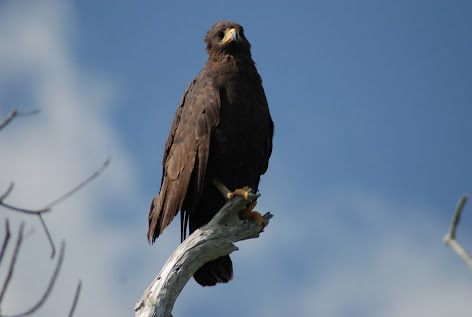
Common Black Hawk

Common Black Hawk
Rio Lagartos, Yucatan

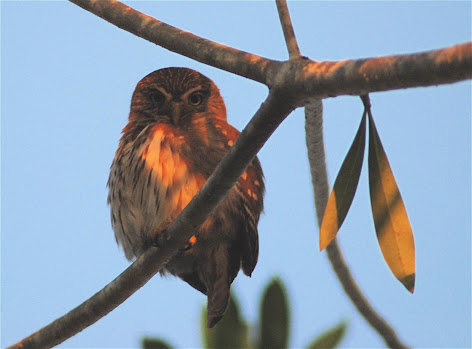
Ferruginous Pygmy-Owl

Ferruginous Pygmy-Owl
Bacalar

Pale-billed Woodpecker

Pale-billed Woodpecker
Kalakmul ruins

Dark-eyed Junco

Dark-eyed Junco
Home

Red-tailed Hawk

Red-tailed Hawk
In my backyard-Las Vegas,NM

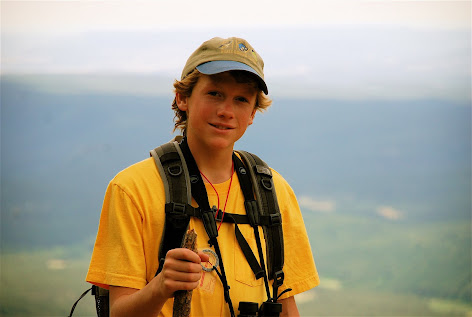
Me on Hermit's Peak

Me on Hermit's Peak
Las Vegas, New Mexico

Zia Being Cute

Zia Being Cute
Home